


Vedas
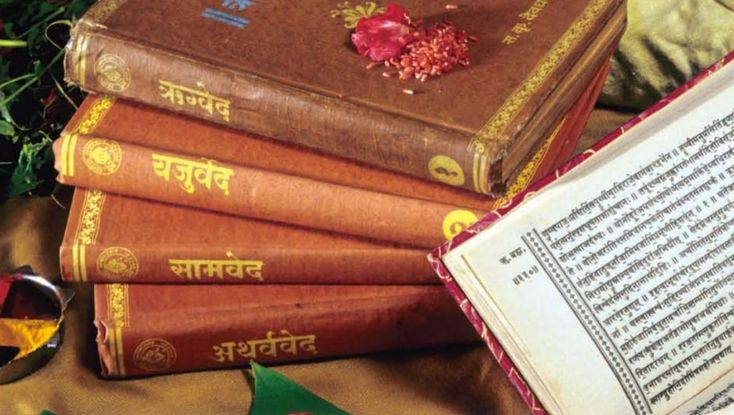
1. Rigveda:
The oldest of the Vedas, the Rigveda is a collection of hymns dedicated to various deities, including Agni, the god of fire, and Indra, the god of thunder and rain. Its secret lies in its poetic verses, which offer profound spiritual wisdom and insights into the nature of reality and the cosmos.
2. Yajurveda:
The Yajurveda primarily consists of prose mantras and rituals used by priests during Vedic ceremonies. Its secret lies in its practical instructions for performing sacrificial rituals, which are believed to have metaphysical significance and spiritual efficacy.
The Yajurveda primarily consists of prose mantras and rituals used by priests during Vedic ceremonies. Its secret lies in its practical instructions for performing sacrificial rituals, which are believed to have metaphysical significance and spiritual efficacy.
3. Samaveda:
The Samaveda is known for its musical chants and melodies derived from the Rigveda. Its secret lies in the transformative power of sound and melody, which are believed to have the ability to evoke spiritual experiences and connect the practitioner with divine energies.
The Samaveda is known for its musical chants and melodies derived from the Rigveda. Its secret lies in the transformative power of sound and melody, which are believed to have the ability to evoke spiritual experiences and connect the practitioner with divine energies.
4. Atharvaveda:
The Atharvaveda contains hymns, spells, and incantations used for various purposes, including healing, protection, and prosperity. Its secret lies in its knowledge of practical spirituality, offering guidance on how to navigate the challenges of life and harness spiritual energies for personal growth and well-being.
The Atharvaveda contains hymns, spells, and incantations used for various purposes, including healing, protection, and prosperity. Its secret lies in its knowledge of practical spirituality, offering guidance on how to navigate the challenges of life and harness spiritual energies for personal growth and well-being.
Together, these four Vedas form the foundation of Hindu philosophy and spirituality, offering timeless wisdom that continues to inspire and guide seekers on their spiritual journey.
1. Rigveda:
Rigveda 1.164.46: “Ekam sat vipra bahudha vadanti” – “Truth is one, though the sages call it by many names.” This verse highlights the idea of Brahman as the ultimate reality beyond all distinctions and names.
Rigveda 1.164.20: “Tad ejati tan naijati, tad dūre tad v antike” – “That moves, and that moves not. That is far, and that is near.” This verse reflects on the omnipresence and transcendence of Brahman.
2. Yajurveda:
Yajurveda 40.8: “Om asato mā sadgamaya, tamaso mā jyotirgamaya, mrtyormā amrtam gamaya”
“Lead me from untruth to truth, from darkness to light, from death to immortality.” This prayer emphasizes the journey from ignorance (untruth, darkness, death) to knowledge (truth, light, immortality), symbolizing the realization of Brahman.
Yajurveda 32.1: “Satyam jnanam anantam brahma” – “Brahman is truth, knowledge, and infinite.”
3. Samaveda:
Samaveda 6.8.1: “Om bhur bhuvah svah tat savitur varenyam, bhargo devasya dhimahi, dhiyo yo nah pracodayat” – The Gayatri mantra, found in the Samaveda, is a prayer to the Sun god Savitar, but it is also interpreted as an invocation of Brahman’s divine light and wisdom.
Samaveda 1.1.1: “Hiranmayena patrena satyasyapihitam mukham” – “The face of truth is covered with a golden vessel.” This verse symbolizes the hidden nature of Brahman, which can be uncovered by the worthy seeker.
4. Atharvaveda:
Atharvaveda 10.8.38: “Ayam Brahma, iti prathamo ‘nusasanam” – “This is Brahman, the first commandment.” This verse affirms the identity of Brahman as the supreme reality.
Atharvaveda 10.7.14: “Sarvam khalvidam brahma” – “All this is indeed Brahman.” This verse emphasizes the all-encompassing nature of Brahman.